ETFE as an Architectural Envelope Material: Daylight, Lightweight Construction, Large Spans
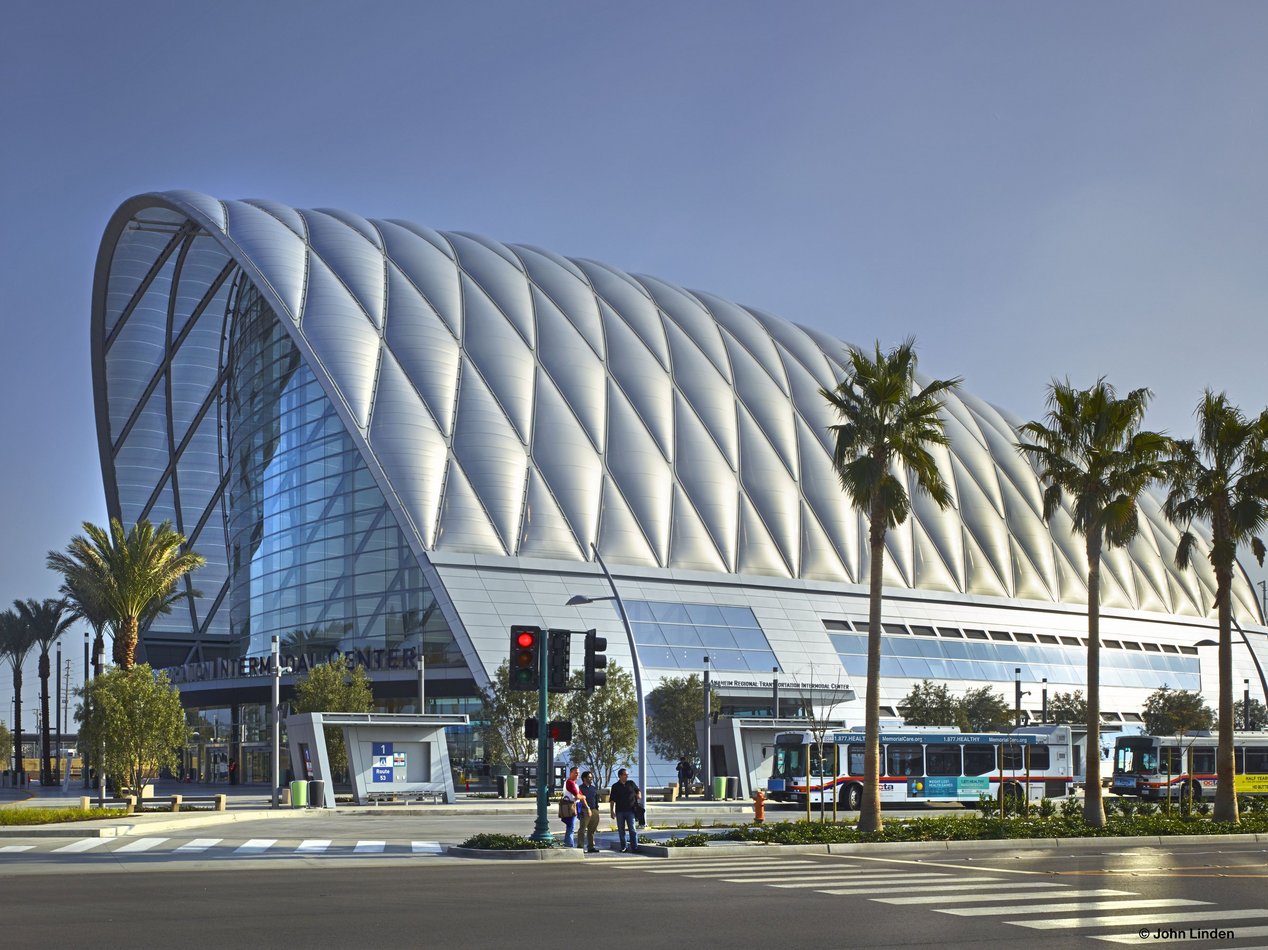
As architects continue to push for lighter, brighter, and more expressive long-span envelopes, ETFE has established itself as a reliable roof and façade solution. ETFE (ethylene tetrafluoroethylene) is specified as a thin-film membrane (100-500 µm) – typically as a mechanically pre-stressed single layer or as a multi-layer, air-supported cushion assembly. For large projects, this system logic matters: ETFE is not simply an alternative glazing material, it is an envelope approach that combines high daylight transmission with structurally efficient secondary framing – and it supports a high degree of formal freedom, enabling expansive, curved, and highly differentiated architectural geometries.
Typical Use Cases: Terminals, Stations, Stadiums
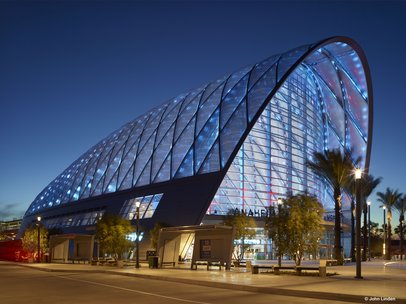
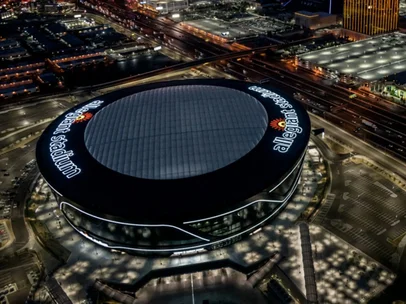
ETFE is commonly considered for airport terminals, railway station canopies, and sports venues, where coverage areas are large, spans are significant, and architectural expression must coexist with rational detailing. In these building types, envelope weight and erection complexity can dominate both program risk and cost, making lightweight solutions strategically relevant.
Performance Benefits That Drive Specification
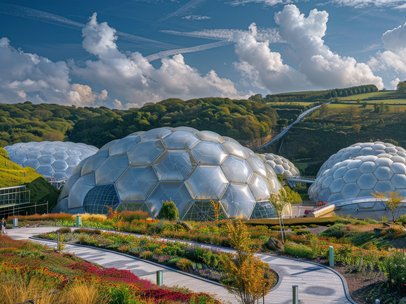
From an architectural standpoint, ETFE enables high visual openness and strong daylight autonomy potential in large volumes. From a structural standpoint, its very low self-weight supports lightweight construction, often allowing slimmer secondary structures and reduced overall tonnage compared with glass-heavy roof concepts. This can improve feasibility for long spans and complex geometries, particularly where the roof grid becomes a primary visual element.
Durability and operations are also central to decision-making on infrastructure assets. ETFE is widely described as stable against external influences and suitable for exposed roof and facade zones. It is also frequently characterized by self-cleaning surface behavior, supporting lower maintenance effort over the service life – a non-trivial advantage where access planning and cleaning logistics affect operational expenditure.
Solar Control as a Design Variable
Early-stage comfort planning typically addresses solar radiation, glare, and resulting heat gains across seasons. With ETFE, transmission can be tuned through system configuration and surface solutions, including printed patterns, allowing teams to regulate incident light and thermal input in a project-specific way. The intent is not to “eliminate heat” in the manner of a fully opaque shading solution, but to balance daylight-driven spatial quality with controlled solar gains to meet the building’s comfort and energy targets. In this context, Hueck Folien, as a coating specialist, focuses on implementing such project-specific printed solutions on ETFE films to support defined architectural and performance objectives.
Design and Identity: Printed ETFE as a Next Step
Once ETFE is technically viable, printed ETFE becomes a meaningful architectural lever. Graphic patterns can support solar control strategies while adding a controlled visual language to large roof fields – particularly relevant for landmark infrastructure and sports architecture.
Request samples or discuss a concept: Contact us to receive ETFE material samples and explore printed options for your next large-span roof or canopy.