Transparency and Printing in ETFE Architecture: How Printed Films Shape Light, Comfort, and Design Intent
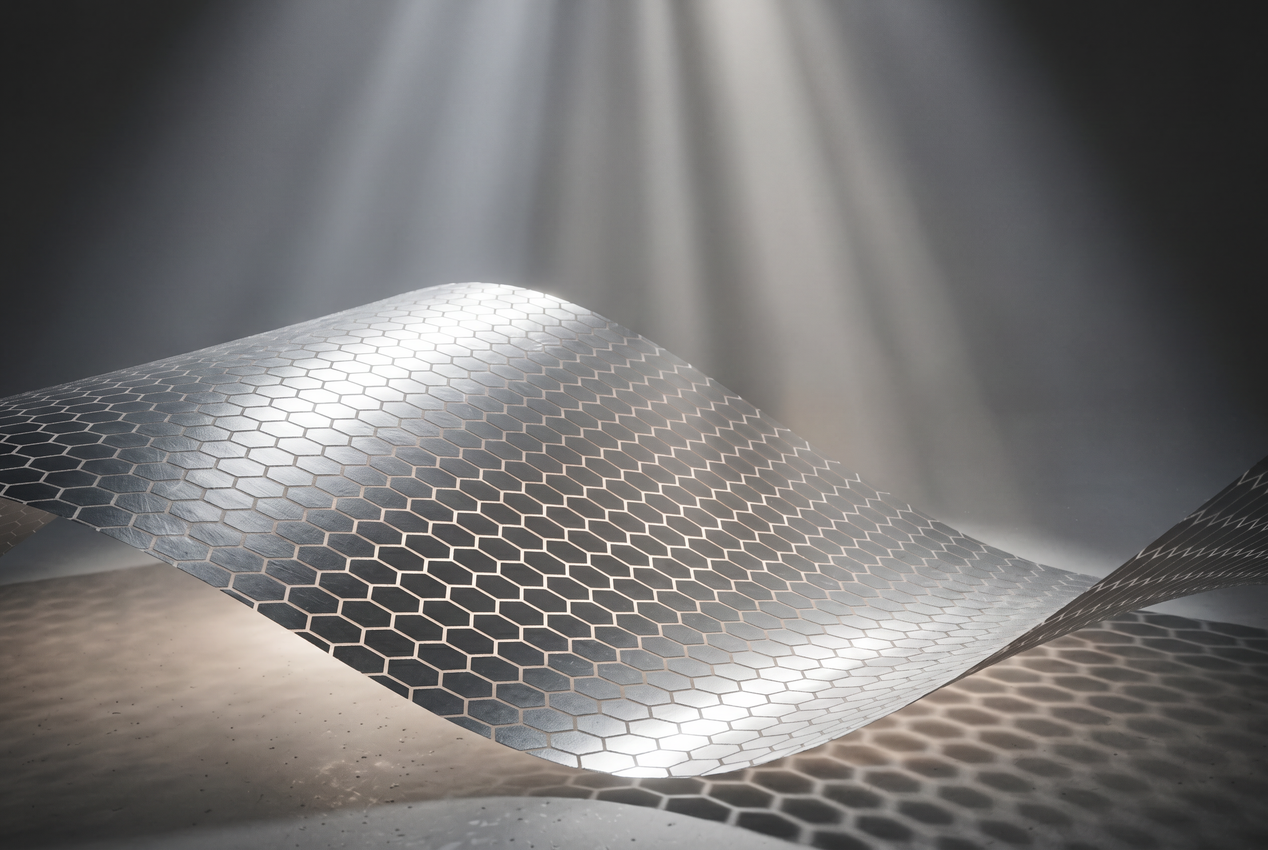
ETFE has earned a place in modern roof and façade design for one simple reason: it delivers an exceptional sense of openness at very low weight. That same high transparency, however, creates a familiar planning challenge in roofs and façades – managing solar gains and visual comfort without sacrificing the architectural idea. Printed ETFE is one of the most effective ways to resolve that tension. It is not just a graphic layer; it is a performance tool that helps translate design intent into measurable daylight and climate outcomes.
In practice, transparency is more than “can you see through it?”. For architects and planners, it sits at the intersection of:
- Daylight quality: soft, diffuse light versus high-contrast sun patches
- Glare risk: especially in atriums, concourses, and circulation zones
- Solar control: actively shaping indoor light conditions while also limiting overheating and peak cooling loads
- Appearance at scale: how the roof or façade reads from distance and from below – and how the print pattern becomes part of the overall architectural concept
A successful ETFE concept defines the desired experience first, then uses the right combination of print strategy and system build-up to achieve it.
Printing as a Design Lever: The Parameters That Matter
Print coverage (area percentage) is the primary lever. Increasing coverage reduces solar energy transmission and can improve visual comfort. Decreasing coverage preserves a clearer sky view and brighter interiors.
Print density and reflectance are an equal design lever. Reflective prints can improve visual comfort by reducing harsh direct sun, yet specular reflections must be managed through pattern design, geometry, and expected viewing angles. A strong frit strategy balances daylight control, solar control, and a calm surface appearance.
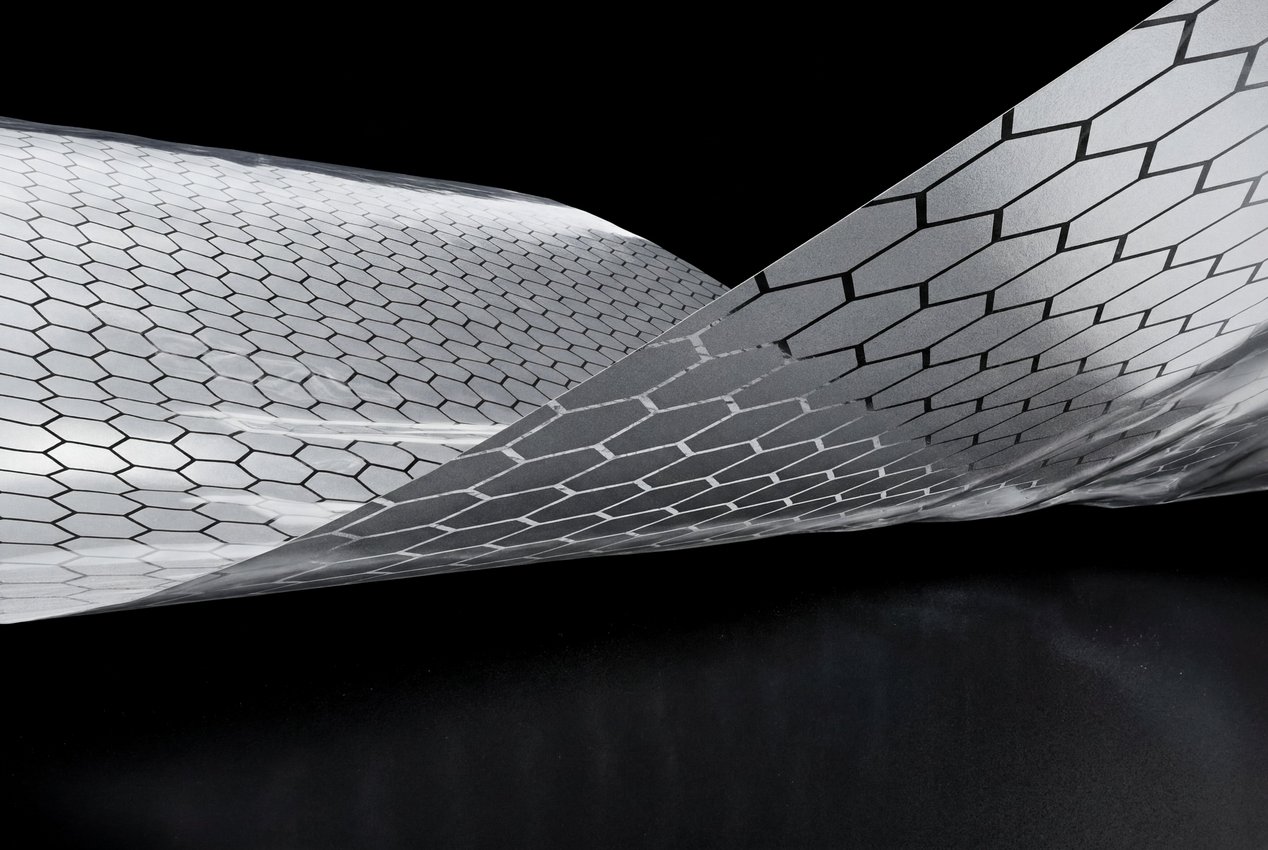
Pattern geometry should stay purposeful. Dot matrices and structured fields remain popular for good reason: they read cleanly across large spans, support consistent perception, and are straightforward to coordinate across panelization and seams. With the Arctens Design Catalogue it is possible to choose from a variety of standard print patterns. Individual print patterns are possible on demand.
Single-Layer vs. Cushion Systems: Where the Strategy Changes
Printed ETFE can be used in both single-layer systems as well as multi-layer cushion systems. The design intent is similar, but the system behavior differs.
For cushions, print is integrated into a system logic where daylight, solar gains, and insulation are tuned together. Print density is used to tailor solar energy transmission (SHGC), while the layer build-up supports the required thermal performance (U-factor). The printed layer can also diffuse incoming sunlight, creating a softer, more uniform interior light that supports visual comfort in large-volume spaces.
For single-layer applications, the role is typically static high-performance shading, often paired with lightweight, wide-span structures. The result is a simple, robust solution for canopies, façades, and open structures.
Print Quality and Durability: The Often-Overlooked Specification
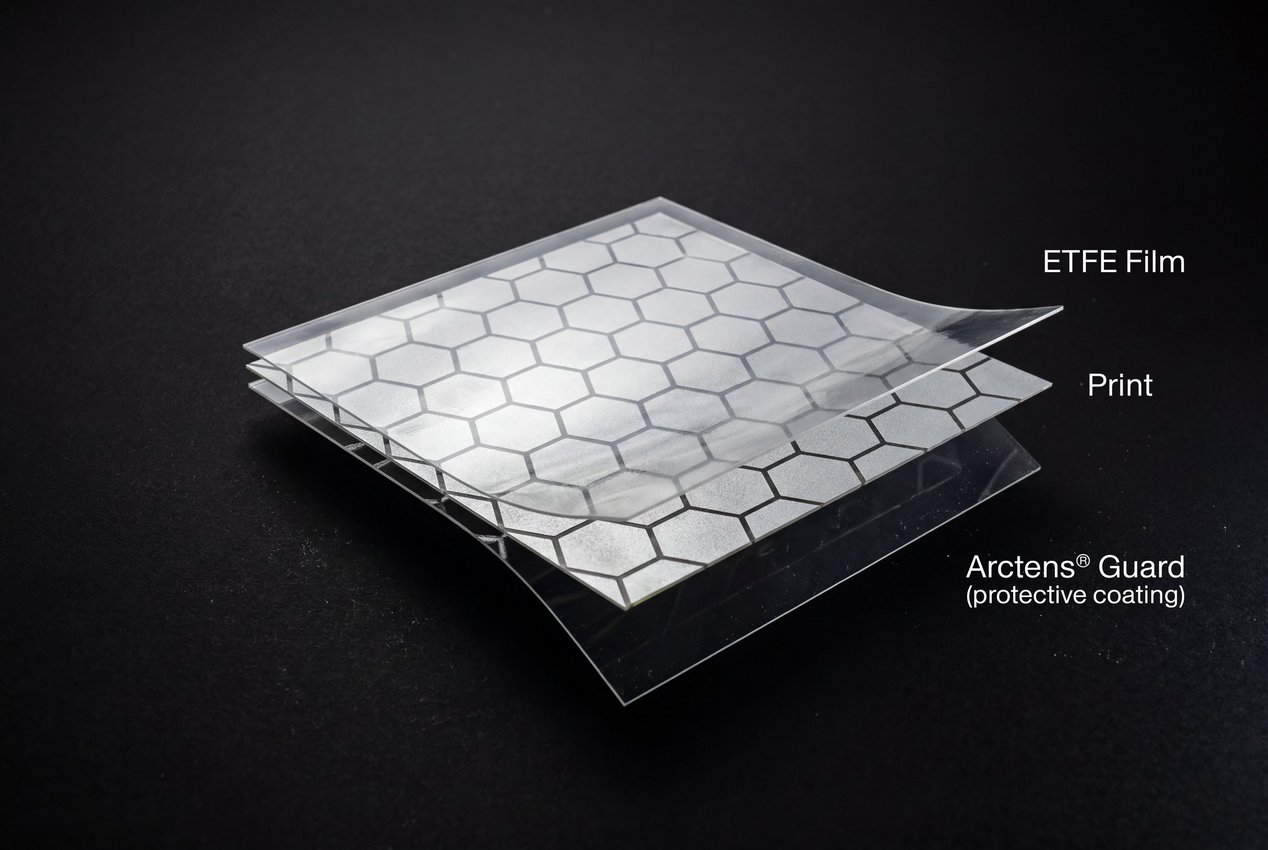
A print pattern only performs over the long term if it is built for the realities of architectural exposure. Hueck Folien’s advanced printing technology for ETFE foils is engineered for exceptional inherent stability and outstanding resistance to UV radiation and environmental stressors. For single-layer ETFE, Hueck Folien’s distinctive approach is to combine high-quality printing with Arctens® Guard – a high-performance protective layer designed to add premium protection for demanding applications.
Next Step: Align Daylight Targets With a Print Strategy
Planning an ETFE roof or façade is easier when the print is treated as a controllable system parameter, not a late-stage graphic decision.
Send us your concept geometry, orientation, and target daylight/solar-control goals – we will propose a print-density approach and system configuration for Arctens® that matches your design intent and performance priorities.